

You’re missing one tooth and your dentist has given you two options, a dental implant or a dental bridge. Both can restore your smile and your ability to chew comfortably, but they work in very different ways.
Many patients in Tumwater, WA want to know which option truly holds up better over time. The answer isn’t the same for everyone. It depends on your jawbone health, the condition of your neighboring teeth, your timeline, and your long-term oral health goals.
This post breaks down how dental implants and dental bridges compare for replacing a single missing tooth so you can walk into your next appointment with a clear picture of what each option involves.
How a Dental Implant Works for a Single Missing Tooth
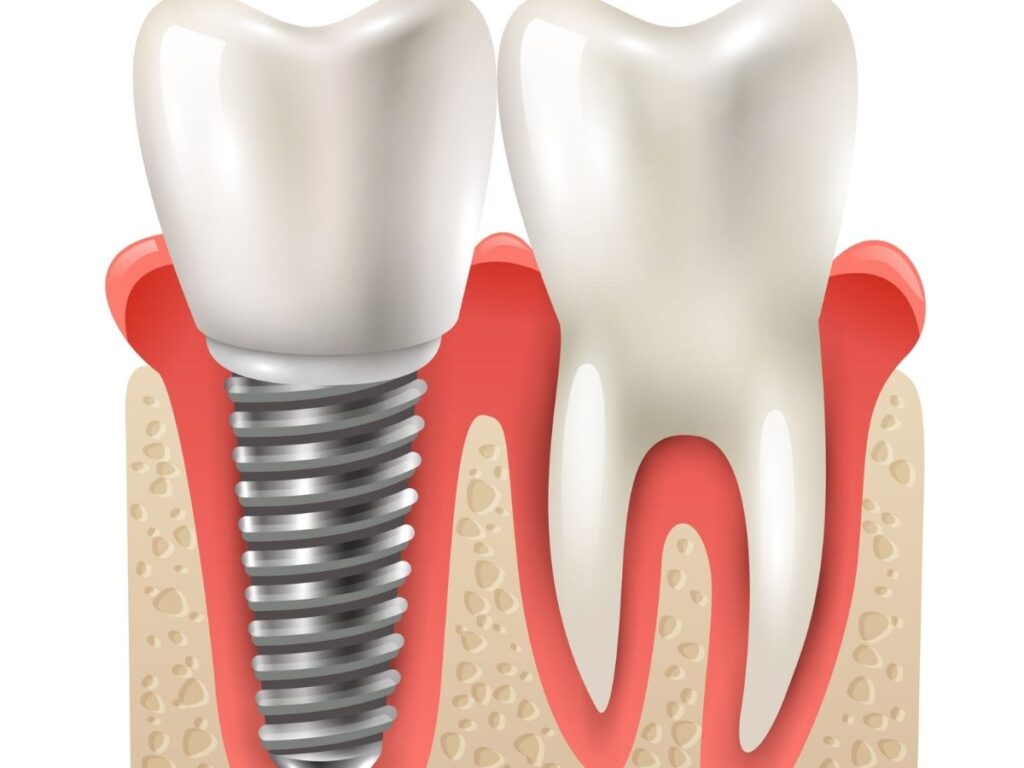
A dental implant replaces the entire tooth root and all. A small titanium post is surgically placed into the jawbone where the missing tooth once sat. Over several months, the post fuses with the bone in a process called osseointegration.
Once healed, a custom crown is attached to the post. If you are exploring dental implants in Tumwater, understanding this healing process helps set realistic expectations for the full treatment timeline.
Because the implant is anchored directly into the jawbone, it does not rely on any neighboring teeth for support. It stands completely on its own.
How a Dental Bridge Works for a Single Missing Tooth
A dental bridge fills the gap left by a missing tooth by anchoring an artificial tooth called a pontic to the two teeth on either side of the space. Those neighboring teeth, called abutment teeth, are prepared by removing a layer of enamel so crowns can be placed over them.
The bridge is then cemented into place as a single connected unit. It is a fixed restoration, meaning it cannot be removed like a partial denture.
A bridge can be completed in fewer appointments than an implant and does not involve surgery. For some patients, this makes it a more practical short-term solution.
Key Differences Between Dental Implants and Bridges
Impact on Neighboring Teeth
One of the most significant differences between these two options is what happens to the teeth around the gap.
A dental bridge requires reshaping two healthy neighboring teeth to serve as anchors. Once that enamel is removed, those teeth will always need crowns going forward even if the bridge is eventually replaced.
A dental implant leaves neighboring teeth completely untouched. This is an important consideration for patients who have otherwise healthy teeth on either side of the missing one.
Jawbone Health Over Time
When a tooth is lost, the jawbone underneath begins to shrink gradually because there is no longer a root stimulating it. This process is called bone resorption.
A dental implant mimics a natural root and continues to stimulate the jawbone after placement. This helps maintain bone density in that area over time.
A dental bridge sits above the gumline and does not interact with the bone below. Bone loss beneath the bridge can continue, which may eventually affect the fit of the bridge or the appearance of the gum tissue in that area.
Treatment Timeline
Dental implant treatment takes longer from start to finish. The healing period after implant placement typically spans several months before the final crown is attached. Patients need to be in good general and oral health before the procedure can begin.
A dental bridge can usually be completed within a few weeks. If time is a factor or if surgical procedures are not an option, a bridge may be the more suitable path forward.
Long-Term Maintenance
A dental bridge requires careful cleaning beneath the pontic using floss threaders or a water flosser to prevent buildup under the false tooth. Without consistent cleaning, decay or gum problems can develop around the abutment teeth.
An implant is maintained much like a natural tooth: regular brushing and flossing, combined with routine dental checkups. There are no special tools required for daily care.
When a Dental Implant May Be the Better Long-Term Choice
For patients with a healthy jawbone and no medical conditions that affect healing, a dental implant in tumwater is often considered the stronger long-term investment for a single missing tooth.
It preserves the bone, protects neighboring teeth, and is designed to function like a natural tooth for many years with proper care. Patients who want to avoid involving healthy surrounding teeth in their restoration tend to prefer this option.
Patients considering implants go through a thorough evaluation to confirm that bone density and overall oral health support a successful outcome. If you are looking for a trusted dentist in Tumwater, WA, our team at Affordable Family Dental is here to guide you through every step.

When a Dental Bridge May Be the Right Fit
A dental bridge may be recommended when the neighboring teeth already have large fillings or crowns and would benefit from the added coverage anyway. In this case, preparing them as bridge abutments makes more clinical sense.
A bridge is also a practical option when implant surgery is not advisable due to medical factors, insufficient bone volume, or patient preference. It is a well-established restoration that has helped patients replace missing teeth for many decades.
If a faster treatment timeline is important or if bone grafting would be needed to support an implant, a bridge can offer a reliable and effective alternative.
What Your Dentist Evaluates Before Making a Recommendation
Your dentist will assess the health of the bone in the missing tooth area through X-rays or a 3D scan. The condition and strength of the neighboring teeth will also be reviewed carefully.
Your medical history, any medications you take, and habits like smoking can all affect how well an implant heals. These factors are considered before any recommendation is made.
Both options require healthy gum tissue and no active signs of gum disease before treatment begins. Addressing any existing periodontal issues first is an important part of preparing for either restoration.
Frequently Asked Questions
How long does a dental implant last compared to a bridge?
With proper care and regular dental visits, a dental implant can function well for many years. A dental bridge typically lasts around ten to fifteen years before it may need to be replaced, though this varies depending on oral hygiene and bite habits. Individual results will differ based on each patient’s health and maintenance.
Is the dental implant procedure painful?
The implant placement is performed under local anesthesia, so discomfort during the procedure is generally well managed. Some soreness and swelling in the days following surgery is normal. Most patients find that over-the-counter pain relief is sufficient during recovery.
Can anyone get a dental implant for a missing tooth?
Not everyone is an immediate candidate. Adequate jawbone density is needed to support the dental implant post. Patients with significant bone loss may require a bone graft first. Certain health conditions and medications can also affect candidacy. A thorough evaluation is needed to determine whether an implant is the right fit.
Will a bridge or implant look natural? Both options are designed to blend with your surrounding teeth. Crowns used for bridges and the crowns placed on implants are custom-shaded to match your natural tooth color. When placed correctly, either restoration can produce a natural, comfortable-looking result.
Conclusion
Dental implants and dental bridges are both well-established options for replacing a single missing tooth but they suit different patients and different situations. An implant preserves the bone and leaves neighboring teeth untouched, making it a strong long-term consideration for suitable candidates.
A bridge offers a faster treatment path and may be the better fit when neighboring teeth already need restoration or when implant surgery is not recommended.
The right choice starts with a proper evaluation. If you are weighing your options for a missing tooth in Tumwater, WA, the team at Affordable Family Dental is here to help you understand what each treatment involves and which one aligns with your oral health needs.
Reaching out to schedule a consultation is a straightforward first step toward restoring your smile with confidence.