
Category: Dental Veneers

  • Can Dental Veneers Fix Uneven Teeth Without Braces?

    Can Dental Veneers Fix Uneven Teeth Without Braces?

    If your teeth are slightly uneven, chipped, or gapped, you may wonder whether you need months or years of orthodontic treatment to improve your smile. In some cases, the answer is no. Dental veneers Tumwater patients consider can improve the appearance of mildly uneven teeth without braces or clear aligners. Veneers are thin, tooth-coloured coverings placed over the surfaces of teeth to change their shape, size, colour, or appearance.

    For patients with minor cosmetic concerns, veneers may help create a balanced-looking smile by disguising gaps, chips, or differences in tooth shape. However, they do not physically move teeth or correct bite and alignment problems.

    If your teeth are significantly crowded, rotated, or misaligned, braces or clear aligners may be more appropriate. A dental professional can assess your teeth, bite, and oral health to determine which option suits your needs and help you make an informed decision about improving your smile.

    At a Glance

    • Veneers can visually correct minor unevenness, chips, gaps, and irregular shapes without moving the teeth.
    • They don’t fix bite problems or significant misalignment, that’s the job of orthodontics.
    • Treatment typically takes just a few visits, compared to months or years for braces.
    • Porcelain veneers are custom-made to match the size, shape, and shade of your smile.
    • A consultation with your dentist is the best way to find out if veneers are right for your case.

    What Are Dental Veneers?

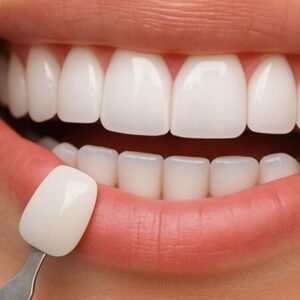
    Dental veneers are thin, custom-made shells that cover the front surface of a tooth to change its shape, color, and alignment appearance. Unlike a crown, which wraps around the entire tooth, a veneer covers only the front side of the tooth, which means less of your natural tooth structure needs to be altered.

    Veneers are typically made from porcelain or composite resin. Porcelain veneers are known for being strong, long-lasting, and natural-looking, which is why they’re a popular choice for patients who want a refreshed smile that still looks like their own teeth. For patients considering veneers in Tumwater , both options are available, and composite veneers are usually a faster, more affordable choice, though they may need touch-ups sooner than porcelain.

    At Affordable Family Dental, veneers are custom-designed to blend with your surrounding teeth, so the goal isn’t a dramatically different smile, it’s a more even, balanced version of the one you already have.

    How Do Veneers Correct the Look of Uneven Teeth?

    Veneers correct the appearance of uneven teeth by covering the visible part of each tooth with a shell shaped to look straight, symmetrical, and uniform in size. A dentist in Tumwater WA can assess whether veneers are suitable for your teeth and cosmetic goals. Even though the tooth underneath hasn’t physically moved, veneers can change its visible appearance. This is different from orthodontics, which repositions the teeth themselves over time.

    Because each veneer is custom-fabricated, your dentist can design shells that visually:

    • Even out teeth that are slightly different lengths or widths
    • Close small gaps between front teeth
    • Camouflage minor rotations or overlaps
    • Smooth out chipped or worn edges that make a smile look uneven
    • Create a more symmetrical smile line across the front teeth

    This makes veneers a practical option for patients whose “uneven” concern is really about the appearance of their smile rather than a functional bite issue.
    Dental Veneers

    Can Veneers Really Replace Braces?

    Veneers can replace braces for mild cosmetic unevenness, but they are not a substitute for orthodontic treatment when the bite itself is misaligned. This distinction matters, because it determines whether veneers alone will solve the problem or whether you need a different approach first.

    Conditions like overbite, underbite, crossbite, and significant crowding are classified as malocclusion, a misalignment of the bite that affects how the upper and lower teeth meet. Malocclusion is common, and treatment options range from monitoring in mild cases to orthodontic appliances such as braces or clear aligners in more significant ones. Dental veneers sit on top of the teeth; they don’t change how the jaw or bite functions, so they aren’t designed to correct these structural issues.

    Where veneers shine is in cases of purely cosmetic unevenness, teeth that are healthy and functionally fine, but don’t look as symmetrical as you’d like.

    Signs Veneers Might Be the Right Fit for You

    You may be a good candidate for veneers instead of braces if you have:

    • Minor gaps between front teeth that don’t affect your bite
    • Slightly rotated or overlapping teeth with no functional bite issues
    • Uneven tooth length or shape giving your smile an irregular appearance
    • Chipped or worn edges making teeth look mismatched
    • Stained or discolored teeth alongside the unevenness, since veneers address both at once

    If any of these sound familiar, a consultation at Affordable Family Dental is the best next step to confirm veneers are appropriate for your specific smile.

    When Braces or Clear Aligners Are Still Necessary

    Braces or clear aligners are still necessary when the concern involves how your teeth actually bite together, rather than just how they look. Signs this may apply to you include noticeable jaw shifting when you bite down, teeth that are significantly crowded or overlapping, or a bite that feels uneven when you chew.

    In these cases, your dentist may recommend orthodontic treatment first, sometimes followed by veneers afterward for any remaining cosmetic touch-ups once the bite is corrected. Skipping orthodontics when it’s truly needed can mean veneers are placed over teeth that continue to shift, which may shorten how long the results look their best.

    Your dentist at Affordable Family Dental will evaluate your bite, not just the visible unevenness, before recommending a treatment path.

    What Does the Veneer Process for Uneven Teeth Involve?

    The veneer process for uneven teeth typically involves a consultation, a small amount of enamel preparation, and two to three visits before your final veneers are bonded in place. It’s a much shorter timeline than orthodontic treatment, which often takes many months to complete.

    A general outline looks like this:

    • Consultation and evaluation, your dentist examines your teeth and bite to confirm veneers are appropriate
    • Treatment planning, the size, shape, and shade of each veneer is planned to even out your smile
    • Tooth preparation, a small amount of enamel is removed so the veneer fits naturally
    • Temporary veneers, worn while your custom veneers are fabricated in a dental lab
    • Final placement, your permanent veneers are checked for fit and bonded in place

    Most patients find the process manageable, with local anesthesia available and mild sensitivity, if any, resolving within a few days.

    Frequently Asked Questions

    Can veneers fix crooked teeth without braces?

    Veneers can visually correct mildly crooked or uneven teeth without braces, since each shell is custom-shaped to look straight and even. They don’t physically move the teeth, so they work best for minor cosmetic irregularities rather than significant crowding or bite misalignment.

    How many veneers do I need to even out my smile?

    The number of veneers depends on how many teeth are affecting your smile’s symmetry, some patients need just one or two, while others choose six to eight across the front teeth for a fully balanced look. Your dentist will recommend a number based on your specific goals during a consultation.

    Are veneers a permanent fix for uneven teeth?

    Getting veneers does involve an irreversible step, since a small amount of enamel is removed to fit them, and they’re designed to be a long-term cosmetic solution. With proper care, porcelain veneers can last many years before needing replacement. 

    Do veneers hurt to get placed?

    Most patients describe the veneer process as manageable rather than painful, especially since local anesthesia is available during tooth preparation. Mild sensitivity for a few days afterward is common and typically resolves on its own.

    How do I know if I need veneers or braces?

    The best way to know is a dental evaluation, since veneers address how teeth look while braces address how teeth and the bite function together. If your concern is purely cosmetic unevenness with no bite issues, veneers alone may be enough, if your bite is affected, orthodontic treatment may be recommended first.

    Conclusion

    For many patients dealing with minor gaps, chips, or uneven-looking teeth, veneers offer a faster path to a more balanced smile than braces, without months of orthodontic treatment. That said, veneers work best when the unevenness is cosmetic rather than a sign of a deeper bite issue. 

    The team at Affordable Family Dental can evaluate your smile and bite during a consultation to help you understand whether veneers, orthodontics, or a combination of both is the right path forward. If you’re ready to explore your options for dental veneers in Tumwater, scheduling a consultation is the best place to start.

    Sources:

    1. American Dental Association (MouthHealthy), What veneers are and how they cover the front surface of teeth, https://www.mouthhealthy.org/all-topics-a-z/veneers
    2. Cleveland Clinic, Malocclusion (misaligned bite) definition and treatment overview, https://my.clevelandclinic.org/health/diseases/22010-malocclusion
    3. NIH National Center for Biotechnology Information (StatPearls), Orthodontics and malocclusion treatment approaches, https://www.ncbi.nlm.nih.gov/books/NBK592395/
    4. Cleveland Clinic, Dental veneers procedure, benefits, risks, and longevity, https://my.clevelandclinic.org/health/treatments/23522-dental-veneers

  • Why Are More People Choosing Dental Veneers for Smile Makeovers?

    Why Are More People Choosing Dental Veneers for Smile Makeovers?

    There’s a reason “smile makeover” has become one of the most talked-about topics in cosmetic dentistry. Patients who once accepted chipped, stained, or uneven teeth as “just the way things are” are now asking what can actually be done; and more of them are walking away with dental veneers than ever before.

    As a dentist in Tumwater, WA, the team at Affordable Family Dental has seen how veneers have become a central option in modern smile makeovers: thin, custom-made shells that reshape, brighten, and even out the front teeth in just a few visits.

    This guide breaks down what dental veneers are, why more patients are choosing them in 2026, what issues they can fix, how porcelain and composite compare, and what to consider before booking a consultation.

    At a Glance

    • Dental veneers are thin, custom-made coverings bonded to the front of your teeth to improve their shape, color, and appearance.
    • Porcelain veneer procedures have risen sharply over the last decade, driven by better materials, digital planning, and demand from patients aged 30–55.
    • A veneer-based smile makeover can typically be completed in 2–3 visits over a few weeks.
    • Veneers are considered irreversible because a small amount of enamel is removed, so a proper dental exam is essential first.
    • With good hygiene and routine dental visits, modern porcelain veneers can last many years; often 10 to 15 or more.

    What Are Dental Veneers, and How Do They Fit Into a Smile Makeover?

    A confident smile can make a lasting first impression and boost your self-esteem. Many people choose cosmetic dentistry to address concerns such as stained, chipped, uneven, or slightly misaligned teeth. Veneers in Tumwater are thin, custom-made shells crafted from tooth-colored materials and bonded to the front surface of teeth to create a more balanced, natural-looking smile. According to the American Dental Association, veneers can improve the appearance of teeth that are discolored, worn, chipped, misaligned, unevenly spaced, or unusually shaped. 

    In a smile makeover, veneers often serve as the primary treatment because they can correct multiple cosmetic concerns at the same time. Rather than treating each issue individually, a dentist may place veneers on the 6, 8, or 10 most visible upper teeth to improve the overall shape, length, color, and symmetry of your smile.

    Unlike dental crowns, which cover the entire tooth, veneers only cover the front-facing surface. Because they require less alteration of the natural tooth structure, veneers are often a preferred cosmetic option for patients with otherwise healthy teeth who want to enhance their smile.

    Why Are More People Choosing Dental Veneers for Smile Makeovers?

    More people are choosing dental veneers because the technology has improved dramatically, the procedure requires only a few visits, and modern porcelain looks far more natural than the bulky veneers of the past. Video calls, social media, and a broader cultural focus on how we present ourselves have also made patients more aware of their smiles than they were a decade ago.

    The American Academy of Cosmetic Dentistry has reported large increases in porcelain veneer procedures over the last decade, with adults aged 30–55 making up a large share of demand. If you’re considering treatment, a dentist in Tumwater, WA can assess whether veneers are suitable for your smile goals. Men now account for a growing portion of new cosmetic patients.

    There are a few practical reasons veneers keep gaining ground:

    • Faster timelines. A veneer makeover often takes just 2–3 appointments over a few weeks.
    • Digital planning. Intraoral scanners let patients preview a potential result before treatment begins.
    • Improved materials. Today’s porcelain is thinner, stronger, and more translucent than earlier generations.
    • Combination-friendly. Veneers pair well with whitening, gum contouring, and clear aligners for a personalized makeover.

    What Cosmetic Issues Can Dental Veneers Address?

    Dental veneers can improve the appearance of:

    • Deep stains that don’t respond to whitening
    • Chipped or worn teeth
    • Small gaps between teeth
    • Uneven, short, or misshapen teeth
    • Minor misalignment or crowding

    Veneers are a cosmetic treatment and do not correct decay, gum disease, or bite issues. Any underlying dental problems should be treated before veneers are placed.

    Dental Veneers

    Porcelain vs. Composite Veneers: Which Is Better for a Smile Makeover?

    Porcelain veneers are commonly chosen for full smile makeovers because they tend to be more durable, more stain-resistant, and longer-lasting. Composite veneers are typically less expensive and can often be placed in a single visit. The right choice depends on your goals, budget, and the condition of your teeth.

    Here’s how they compare in practice:

    • Porcelain veneers. Custom-made in a dental laboratory from an impression or digital scan of your teeth. They tend to look highly natural because porcelain reflects light similarly to natural enamel. According to Cleveland Clinic, porcelain veneers can last roughly 10 to 15 years with proper care.
    • Composite veneers. Made from a tooth-colored resin that is shaped and bonded directly to the tooth in one appointment. They usually cost less and require less enamel removal, but they may not last as long and can be more prone to staining.

    For a full smile makeover, many patients choose porcelain for its durability and long-term appearance. For a small chip or a single-tooth touch-up, composite is often a practical option; your dentist can help you weigh the trade-offs.

    What to Expect When You Visit a Dentist in Tumwater, WA for Veneers

    A veneer smile makeover usually takes 2–3 visits over a few weeks. Here’s what to expect:

    • Consultation: Your dentist assesses your oral health and discusses your smile goals.
    • Tooth preparation: A small amount of enamel is removed to create space for the veneers.
    • Scans or impressions: Used to create custom veneers.
    • Temporary veneers: May be placed while your final veneers are being made.
    • Bonding: The custom veneers are checked and permanently attached to your teeth.

    Most patients experience only mild discomfort and return to normal activities the same day.

    Are You a Candidate?

    Healthy teeth and gums are essential for veneers. They can improve the appearance of stained, chipped, gapped, or uneven teeth but may not be suitable if you have decay, gum disease, weak enamel, or severe grinding.

    Before treatment, a licensed dentist should perform a thorough evaluation. If you’re considering veneers in the Tumwater or Olympia area, Affordable Family Dental can help determine whether they are the right option for your smile.

    Frequently Asked Questions

    How long do dental veneers last?

    Porcelain veneers typically last between 10 and 15 years, and sometimes longer, with good oral hygiene and regular dental visits. Composite veneers usually last a shorter period; often around 5 to 7 years; before they may need repair or replacement. Longevity depends on your bite, your habits, and how well you care for them at home.

    Are dental veneers painful to get?

    Most patients report only mild discomfort during and after the veneer procedure. Local anesthetic is used during tooth preparation, and any sensitivity afterward is usually short-lived. Your dentist can walk you through what to expect and how to manage temporary sensitivity.

    How many veneers do I need for a smile makeover?

    Most veneer-based smile makeovers involve 6, 8, or 10 upper front teeth, depending on how wide your smile is. Some patients only need a few veneers for a specific issue, while others choose a larger set for a uniform result. Your dentist will recommend a number based on your smile line and goals.

    Do dental veneers stain over time?

    Porcelain veneers are highly resistant to staining because the material is non-porous. Composite veneers, on the other hand, can stain more easily, similar to natural teeth. Limiting coffee, tea, red wine, and tobacco helps veneers stay bright longer.

    Does insurance cover dental veneers?

    Veneers are generally considered cosmetic, so most dental insurance plans do not cover them. In limited cases where a veneer is placed for a medically necessary reason; such as repairing structural damage; partial coverage may apply. Your dental office can help you review options and available payment plans.

    Final Thoughts

    Dental veneers remain one of the most common treatments in a modern smile makeover. They address multiple cosmetic concerns in one treatment plan, deliver natural-looking results with today’s improved porcelain, and can be completed in just a few visits; a big part of why more people are choosing them for smile makeovers in 2026.

    If you’re considering a smile makeover, the most important next step is a conversation with a licensed dentist who can evaluate your oral health and discuss what’s realistic for your smile. The team at Affordable Family Dental, located at 6015 Capitol Blvd SW, Tumwater, WA 98501; offers personalized cosmetic consultations to help you understand your options and decide whether veneers are the right fit for you.

    Sources:

    1. American Dental Association (MouthHealthy); Veneers: types, procedure, and candidacy; https://www.mouthhealthy.org/all-topics-a-z/veneers 
    2. American Dental Association; Statement on Reports of “Veneer Technicians” (May 2024); https://www.ada.org/about/press-releases/statement-on-recent-reports-of-veneer-technicians 
    3. Colgate Oral Care Center; Dental Veneers: Benefits, Procedure, and Maintenance; https://www.colgate.com/en-us/oral-health/veneers
    4. Cleveland Clinic; Dental Veneers: cost, procedure, and longevity; https://my.clevelandclinic.org/health/treatments/23522-dental-veneers
Book Appointment