

Losing a tooth, whether from decay, injury, or extraction, can affect far more than your smile. It can change the way you chew, alter how you speak, and even cause the surrounding teeth to shift out of place over time. If you have a missing tooth and are looking for a dependable solution, dental bridges may be exactly what you need.
A dental bridge is a fixed, custom-made restoration that literally “bridges” the gap where a tooth once was. It is one of the most time-tested approaches in restorative dentistry, designed to support both the function and appearance of your smile.
At Affordable Family Dental in Tumwater, Washington, our team helps patients of all ages, including seniors managing age-related tooth loss and adults dealing with unexpected extractions, understand their options and make confident decisions about their oral health.
In this post, you will learn how dental bridges work, the types available, who may be a good candidate, what the process involves, and how to keep your bridge in great shape for years to come.
What Is a Dental Bridge and How Does It Work?
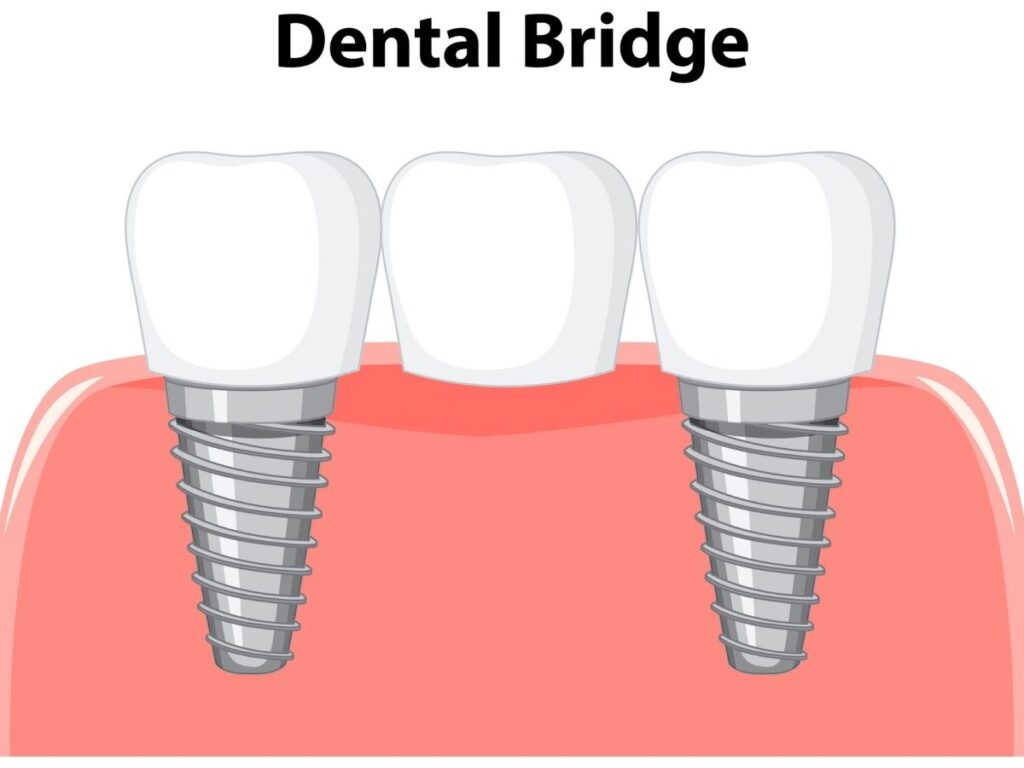
A dental bridge consists of one or more artificial teeth, called pontics, held in place by dental crowns on either side. These crowns are placed over the natural teeth (or implants) adjacent to the gap, anchoring the bridge securely in your mouth.
Think of it like a small architectural bridge: the crowns act as support structures on both ends, and the pontic spans the open space in between. The entire restoration is bonded into place, so it does not come in and out like a removable partial denture.
This fixed design gives dental bridges in Tumwater several advantages, they feel stable, look natural, and allow you to eat and speak with much greater ease. The crowns that hold the bridge in place are custom made to blend with your surrounding teeth. You can learn more about how they are designed on our dental crowns page.
Types of Dental Bridges: Which One Might Be Right for You?
There are several types of dental bridges, and the best choice depends on the location of the missing tooth, the condition of your surrounding teeth, and your overall oral health goals.
Traditional Dental Bridge
This is the most commonly placed type. It uses crowns on the two teeth flanking the gap to hold the pontic in the middle. Traditional bridges are strong, reliable, and well-suited for replacing missing back or front teeth when healthy natural teeth are present on both sides of the gap.
Cantilever Bridge
A cantilever bridge is supported by a crown on only one adjacent tooth, making it an option when there is only one natural tooth next to the gap. It is less common than a traditional bridge and is typically used in areas with lower bite pressure.
Maryland Bonded Bridge
Also known as a resin-bonded bridge, a Maryland bridge uses a metal or porcelain framework bonded to the back of the adjacent teeth rather than crowns. This approach preserves more of the natural tooth structure, making it a popular option for replacing front teeth.
Implant-Supported Bridge
When multiple teeth are missing in a row, an implant-supported bridge uses dental implants as anchors instead of natural teeth. This provides a very stable foundation, though it does require a separate surgical phase to place the implants before the bridge is made.
Who May Be a Good Candidate for a Dental Bridge?
Dental bridges can be a suitable option for a wide range of patients. You may be a good candidate if you have one or more missing teeth in a row, healthy teeth or implants on either side of the gap to serve as anchors, good gum health with no active periodontal disease, and sufficient jawbone density in the area of the missing tooth.
Seniors dealing with age-related tooth loss, adults who have had a tooth extracted, and patients looking for a more affordable alternative to implants are among those who often benefit most from dental bridges. Younger patients may also be good candidates, though a dentist will evaluate jaw development and other factors before recommending treatment.
A thorough evaluation at Affordable Family Dental allows our team to review your dental X-rays, examine the health of your surrounding teeth and gums, and discuss which bridge design may work best for your specific situation.
What to Expect During the Dental Bridge Process
Getting a dental bridge typically involves two to three appointments spaced over a few weeks. Here is a general overview of what the process looks like:
• Consultation and Exam: Your dentist will examine your mouth, take X-rays, and discuss your goals to determine if a bridge is the right fit.
• Tooth Preparation: Your dentist in Tumwater will gently reshape the abutment teeth on either side of the gap to make room for the crowns that will hold the bridge.
• Impressions and Temporary Bridge: Detailed impressions are taken and sent to a dental lab where your custom bridge is crafted. A temporary bridge is placed to protect your teeth in the meantime.
• Permanent Placement: Once your custom bridge is ready, your dentist checks the fit, makes any needed adjustments, and bonds it securely into place.
The result is a natural-looking restoration that is designed to blend seamlessly with your surrounding teeth.
How to Care for Your Dental Bridge
Proper care can help your dental bridge last for many years. Here are some habits that support the longevity of your restoration:
• Brush twice daily using a soft-bristled toothbrush, paying close attention to where the bridge meets the gumline.
• Use a floss threader or water flosser to clean beneath the pontic, where a standard floss string cannot easily reach.
• Visit your dentist regularly for professional cleanings and checkups so any early issues can be caught before they become bigger problems.
• Avoid very hard or sticky foods that could put excessive stress on the bridge or loosen the bonding.
With consistent oral hygiene and routine dental visits, a well-placed bridge can serve you reliably for a decade or longer in many cases.
Frequently Asked Questions About Dental Bridges
How long does a dental bridge last?
With proper care, many dental bridges last 10 to 15 years or more. The lifespan depends on factors such as oral hygiene habits, the location of the dental bridge in your mouth, and regular dental checkups. Keeping the supporting teeth and surrounding gums healthy is key to making your bridge last.
Is getting a dental bridge painful?
The procedure is typically performed under local anesthesia, so most patients experience little to no discomfort during treatment. Some mild soreness or sensitivity in the days following tooth preparation is normal and usually manageable. Your dental team can guide you on what to expect and how to stay comfortable during recovery.
Are dental bridges covered by insurance?
Many dental insurance plans cover a portion of the cost of a dental bridge, especially when the tooth loss is related to injury or decay. Coverage varies widely by plan, so it is a good idea to check with your insurance provider before treatment. The team at Affordable Family Dental is happy to help you understand your benefits and explore payment options.
What happens if I do not replace a missing tooth?
Leaving a gap untreated can lead to several oral health concerns over time. Neighboring teeth may gradually drift into the empty space, altering your bite alignment. The jawbone beneath the gap may begin to shrink without the stimulation a tooth root provides. This can contribute to facial changes, difficulty chewing, and increased strain on surrounding teeth. Addressing a missing tooth sooner rather than later may help prevent these complications.
Ready to Fill the Gap? Talk to Our Team Today
A missing tooth does not have to stay that way. Dental bridges offer a time-tested, comfortable, and natural-looking way to restore your smile and protect your overall oral health. Whether you are dealing with a single missing tooth or exploring options for multiple gaps, there is likely a bridge solution designed to meet your needs.
At Affordable Family Dental in Tumwater, Washington, we work with patients of all ages to find restorative solutions that fit their lives and their budgets. If you have been living with a missing tooth and want to learn whether a dental bridge could be the right next step, we would love to help you take it. Schedule a consultation with our team today and take the first step toward a fuller, healthier smile.